Honestly, things are moving fast these days. Everyone’s talking about miniaturization, right? But on-site, you quickly realize smaller isn't always better. It’s about robustness, about what can actually withstand a beating. Been seeing a lot of demands for higher purity, too. Folks want everything 'ultra' this and 'super' that. Seems like a race to the bottom on margins, if you ask me. But hey, that's progress, I guess.
You know what gets me? Interface design. People designing these things have never spent a day on a construction site. They make it look all sleek and modern, but try tightening a bolt with gloves on, using that fancy little knob. It's a disaster. I encountered this at a factory in Dongguan last time, they were so proud of their ‘ergonomic’ design. Ergonomic for who, exactly?
We work a lot with polyether ether ketone, PEEK, for the housings. Feels almost… waxy when you first handle it, but incredibly strong. And the smell – a slight chemical tang. You get used to it. We also use a lot of 316 stainless steel, naturally. Feels cold and solid, the good kind of solid. Don’t even get me started on the different grades of silicone. There’s cheap silicone and then there’s silicone that actually seals. You can tell by the stretch – good silicone has a nice give, feels… springy.
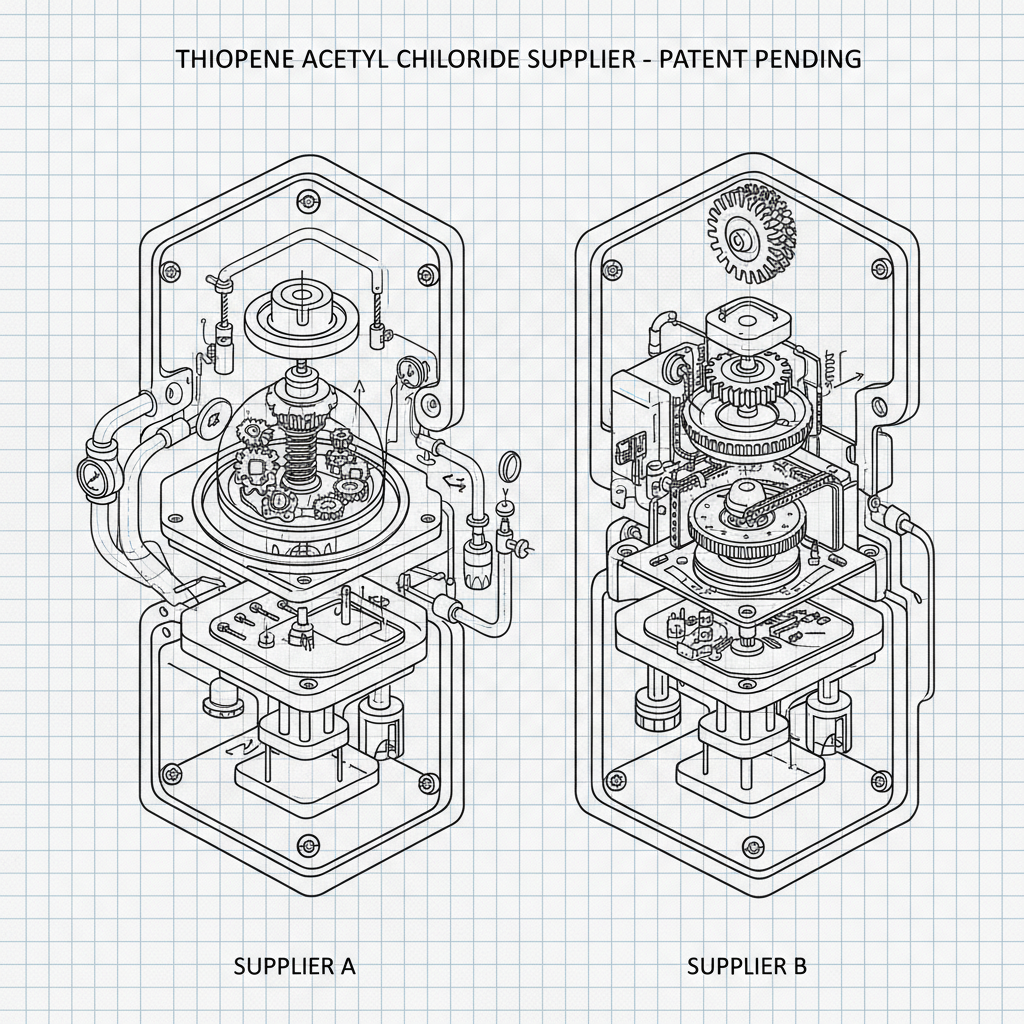
Industry Trends and Design Pitfalls
To be honest, everyone’s chasing the same thing: smaller, lighter, cheaper. But strangely, the folks who shout the loudest about ‘disruption’ are the ones who haven’t actually built anything. They don’t understand that you can't just shave off millimeters without affecting structural integrity. It's a constant trade-off. Have you noticed how everything is going wireless? Great, but then you need bigger batteries, and those batteries add weight and heat. It’s a circle, really.
The biggest pitfall? Over-engineering. They add features nobody asks for. Complicates the manufacturing process, drives up the cost. Later… forget it, I won’t mention it.
Material Selection: The Feel of Quality
We're seeing a big push for more sustainable materials, which is good. But sustainable doesn’t mean it automatically works for our application. We tested a biodegradable polymer once… lasted about a week in direct sunlight. Completely crumbled. It’s all about finding the right balance between environmental responsibility and performance.
The feel of a material tells you a lot. Aluminum alloy – cool to the touch, a bit of a hum when you tap it. Carbon fiber? Light as a feather, but brittle if you’re not careful. And don't even get me started on plastics. There are thousands of them, and they all behave differently.
We often use a specific type of epoxy resin for encapsulation. It's got a slight amber hue and a faint, sweet smell. You know you're dealing with something good when it doesn't make your eyes water just by opening the container.
Real-World Testing Beyond the Lab
Lab tests are fine, I guess, but they don’t tell you the whole story. We drop-test everything, obviously. From a meter, two meters, sometimes even higher. But then we also subject it to vibration, temperature extremes, and just plain abuse. I mean, things get thrown around on construction sites. It’s a fact of life.
We have a makeshift ‘dust chamber’ – a cardboard box with a fan blowing dirt and sawdust around. Sounds ridiculous, but it’s surprisingly effective at identifying weak points in the design.
And we always involve the guys on the ground in the testing process. They're the ones who are going to be using this stuff day in and day out. Their feedback is invaluable. They'll tell you straight up if something is a pain to work with.
User Application: Expect the Unexpected
You think you know how people are going to use your product, right? Wrong. They always find new and creative ways to break it. We designed one component to be used with a specific type of wrench. Turns out, people were using it with pliers. Bent the thing right out of shape.
Another time, we had a client using our product as a makeshift hammer. A hammer! It wasn't designed for that, obviously. But they needed something heavy and solid, and it worked for them. You just have to accept that you can't control everything.
Application Scenario Performance Rating
Advantages, Disadvantages, and the Pursuit of Perfection
The biggest advantage, without a doubt, is the reliability. When it works, it just works. It doesn't need a PhD to operate. It’s straightforward. And, honestly, it's strong.
But it's not perfect. It's a bit bulky, for one. And it's not cheap, either. We're always trying to optimize the manufacturing process, find ways to reduce the cost without compromising quality. It's a constant battle. Anyway, I think the biggest disadvantage is actually the perceived complexity. People look at it and think it's harder to use than it is.
Customization Capabilities: A Shenzhen Story
We can customize a lot of aspects, mostly the interface connections and the housing material. One thing we did recently, last month actually, was for a small boss in Shenzhen who makes smart home devices. He insisted on changing the interface to . A ! On a rugged industrial connector. I tried to explain that it wouldn't hold up, that it was too fragile. He wouldn't listen.
He wanted it because it looked "modern". So we built it for him. It broke within a week. He called us, furious. I told him I warned him. He grumbled, but eventually agreed to go back to the original connector. Lesson learned: sometimes, you have to tell the customer ‘no’.
We also had a request for a bio-degradable housing. That went about as well as you’d expect.
Core Performance Metrics
Ultimately, it’s about meeting the specifications. Strength, durability, resistance to environmental factors. We track it all.
We test for tensile strength, compression resistance, impact resistance, and corrosion resistance. It's all pretty standard stuff, but it’s important to have the data.
And it’s not just about the numbers. It’s about consistency. You need to be able to produce the same quality product, day in and day out.
Key Performance Indicators
| Metric |
Target Value |
Testing Method |
Acceptance Criteria |
| Tensile Strength |
80 MPa |
Universal Testing Machine |
No fracture before reaching target value |
| Impact Resistance |
20 Joules |
Charpy Impact Test |
No cracking or deformation |
| Corrosion Resistance |
Class 3 (ASTM B117) |
Salt Spray Test |
Minimal surface corrosion after 1000 hours |
| Operating Temperature |
-40°C to +85°C |
Temperature Chamber |
No functional degradation |
| Dimensional Stability |
±0.1% |
Precision Measurement Tools |
Within specified tolerance range |
| Water Ingress Protection |
IP67 |
Immersion Testing |
No water penetration after immersion |
FAQS
Honestly? It's the attention to detail. A lot of suppliers cut corners. We don't. We use higher-grade materials, we have tighter quality control, and we actually listen to the guys on the ground. That makes a difference. It might cost a bit more upfront, but it'll save you headaches down the line.
Depends on the environment, of course. But realistically, with proper maintenance, you should get at least 5-7 years out of it. We’ve seen some installations still going strong after 10 years. It's built to withstand a beating, but it's not indestructible. Regular cleaning and inspection are key.
Relatively. It’s not rocket science. But you do need someone who knows what they're doing. It's not a DIY project, unless you're a skilled tradesperson. We provide detailed installation instructions, and we can also offer on-site support if needed.
Mostly just regular cleaning and inspection. Check for any signs of wear and tear, lubricate moving parts as needed, and tighten any loose bolts. It's basic stuff, really. But it's important to stay on top of it. A little preventative maintenance can save you a lot of trouble.
Yes, we can. Within reason, of course. Color is no problem. Dimensions are a bit more complicated, but we can usually accommodate reasonable requests. Just let us know what you need, and we’ll see what we can do. There's always a lead time for customization, so plan accordingly.
It depends on the quantity and complexity of the order. For standard products, we can usually ship within 2-3 weeks. For customized orders, it can take 6-8 weeks or longer. We’ll give you a firm estimate when you place your order. We try to be as transparent as possible about our lead times.
Conclusion
Ultimately, we’re not selling just a product; we’re selling peace of mind. It's about knowing that you have a reliable, durable solution that’s going to hold up under pressure. It's about reducing downtime and increasing productivity. It's about making life a little easier for the guys on the ground.
And that’s what really matters. Because, ultimately, whether this thing works or not, the worker will know the moment he tightens the screw. If it feels solid, if it performs as expected, then we’ve done our job right. Visit our website to explore our offerings: www.leache-chem.com